
Skip to content

Clear communicationFree inspections

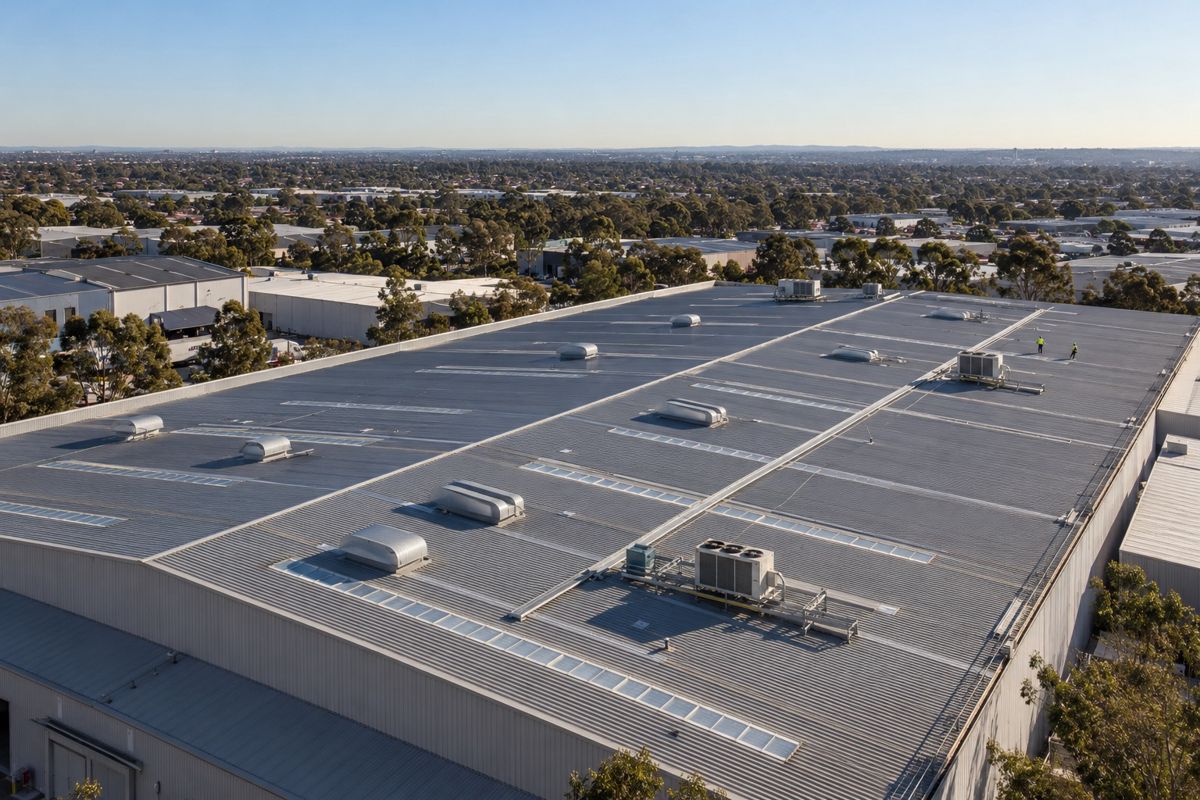
Large Sydney warehouse with profiled metal roof, skylights and vents

Commercial roofing in Sydney

Commercial roofing in Sydney for warehouses, shops and strata

Roof work on a trading building needs planning. We scope the job, explain the options and work with how your site operates.

  • Metal deck, membrane and flat roofs
  • Planned around your business
  • Written scope and quote

Step 1 of 3

What do you need?

What does commercial roofing cover in Sydney?

Commercial roofing covers any roof on a non-residential building, and in Sydney that spans a lot of ground. Think warehouses and factories in industrial areas like Silverwater, Smithfield and Alexandria, retail strips and shopping centres, offices, schools, and strata apartment buildings with common roof areas.

The work includes repairs, re-sheeting, roof coatings, flashing and gutter work, skylight and ventilation replacement, and full roof replacements. Many commercial roofs are large, flat or low pitch, and have plant and equipment sitting on them. That changes how the job is planned, from site access to protecting the stock and people below.

If you are not sure where to begin, a roof inspection gives you a written view of the condition so you can budget and plan in the right order.

What types of commercial roofs are common?

Most commercial roofs in Sydney fall into a few groups.

  • Metal deck. Profiled steel sheeting such as Trimdek or similar, common on warehouses, factories and sheds. Light and quick to install, but fasteners, laps and rust are the weak points.
  • Membrane. Single-ply or built-up membranes on flat roofs over shops, offices and apartment buildings. Seams, upstands and drainage details are where they usually fail.
  • Concrete flat roofs. Typical on older buildings, often waterproofed with a membrane or coating that wears out.
  • Tiled and mixed roofs. Seen on smaller commercial buildings and converted houses.

Skylights and roof ventilation

Translucent sheets and roof vents age quickly in the sun and are common leak points. They also bring extra safety issues because old sheets can be brittle and unsafe to walk on.

What problems do commercial roofs have?

The usual problems are predictable. Ponding water collects where falls are poor or outlets are blocked. Flashings and sealants age and crack. Metal sheets corrode at the edges and fasteners work loose as the roof expands and contracts in the heat. Box gutters and internal downpipes overflow when they clog with leaves, and the water goes inside the building.

Older industrial roofs may also have asbestos cement sheeting. If your building predates the mid-1980s, ask for testing before any work. Asbestos removal in NSW has strict rules and is not something to attempt without the right licence.

Roof plant, solar panels and aerial installations add penetrations and foot traffic. Each one is a leak risk if the flashing is not done well. Regular checks pay off because a small repair now can avoid wet stock and downtime later.

Commercial roofing quotes depend on roof area, access, height, condition of the substrate, roof system and the scope of work. Safety is a big cost driver. Working at heights on large roofs may need edge protection, anchor points, safety mesh under skylights, scaffolding or elevated work platforms. Waste removal and crane access can also matter.

Approvals depend on the building and the work. Replacing like for like may be minor work, while changes to materials, falls, plant or building form can need council consent or a certifier. Strata schemes need owners corporation approval and often a committee process. Insurers and lease terms can also matter for tenanted buildings.

Ask for the scope, system, preparation work, flashings and drainage to be itemised in the quote. For a worn roof, comparing coating and restoration against a full roof replacement is worth doing.

How is the work planned around a trading business?

Most commercial buildings cannot simply shut down. Good planning covers the roof in stages, so only part of the building is exposed at a time. It also covers working hours, noise, dust, deliveries, parking and pedestrian safety on the ground. Stock and equipment under the work area may need to be moved or covered.

On the day, expect safety setup first, then removal or preparation, and finally the new roof covering or repair. Weather can pause work, because membranes and sealants need dry conditions to bond.

When to call

Call when you notice leaks, ponding, rust, brittle skylights, damaged flashings or a tenant complaint about water. A planned job costs less in disruption than an emergency one. You can also begin on our home page and describe the building, the roof type and what you can see.

Clear communication
Free inspections
Written estimates
Local crew

Request commercial roofing

Tell us what you need and we call you back.

Step 1 of 3

What do you need?

No obligation.

Questions about roofing in Sydney

Can commercial roof work happen while the business keeps trading?

Often yes, with planning. Work can be staged section by section, scheduled around trading hours and arranged to keep entrances and loading areas safe. Some noisy or disruptive stages may need to happen outside peak times. Discuss access, deliveries and stock protection when you ask for a quote.

How do I know if my warehouse roof contains asbestos?

You cannot tell by looking. Cement sheeting installed before the mid-1980s may contain it, and it can look like newer sheets. Have the material tested by a qualified person before any work. If asbestos is present, removal needs the right licence and strict handling and disposal procedures.

Is a roof coating better than replacement?

It depends on the roof. Coatings can extend the life of a sound metal or membrane roof and reduce heat, but they cannot fix wet insulation, rusted-through sheeting or failed structure. A proper inspection should show whether restoration or replacement makes more sense for your building.

Do strata buildings need special approval for roof work?

Usually the owners corporation must approve work on common property, and large jobs may need a general meeting vote or a committee decision. Check your strata by-laws and speak with your strata manager early. A written scope and quote makes the approval process easier.

How often should a commercial roof be inspected?

Many building owners inspect at least once a year and after major storms, with extra checks if there is a lot of foot traffic or plant on the roof. Check your insurance and lease terms too. Regular inspections help catch problems while repairs are still small.

How it works

  1. Step 1

    Call or request a quote

    Tell us what is happening with the roof.

  2. Step 2

    Free inspection

    A roofer checks the roof and gives a written price.

  3. Step 3

    Work done right

    Clean crew, nail sweep, warranty in writing.

Ready when you are

Call now or request a quote online.

(02) 5550 8665