
Skip to content

Clear communicationFree inspections

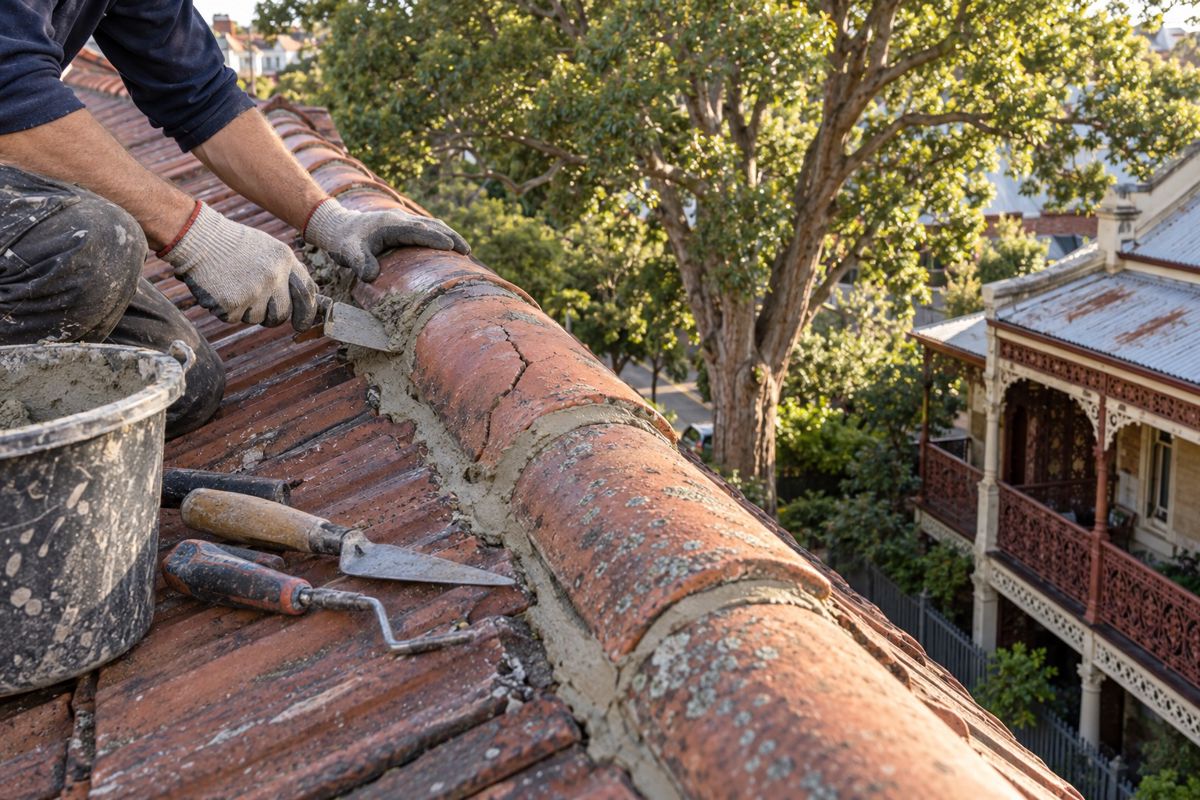
Roofer's hands repairing a cracked terracotta ridge cap on an older Sydney house

Roof repair in Sydney

Roof repair in Sydney: find the leak, fix the cause

A ceiling stain is rarely directly under the hole. We trace the water back to its source before any repair is quoted.

  • Leak tracing, not guesswork
  • Tile, metal and flat roofs
  • Written quote before work starts

Step 1 of 3

What do you need?

What causes roof leaks in Sydney homes?

Most leaks come from a handful of causes. On tile roofs, the usual culprits are cracked or slipped tiles, crumbling ridge and hip capping, and failed pointing where the mortar has aged. Flexible pointing is now common because mortar cracks as the roof moves.

On metal roofs, leaks often start at fasteners, laps between sheets, rusted edges and poorly sealed penetrations such as vents and skylights. Salt air near the coast speeds up corrosion, so older sheets close to the water can fail sooner.

On every roof type, the weak spots are the details. Flashings around chimneys, walls and valleys fail more often than the main surface. Blocked gutters and downpipes are another common cause, because water backs up under the roof edge during a downpour. After a Sydney summer storm, a roof that looked fine can suddenly show a drip.

How is a roof leak actually found?

The stain on your ceiling is rarely directly beneath the hole. Water runs along battens, sarking and rafters before it drops, sometimes a couple of metres from where it came in. That is why a quick patch over the stain often fails.

Leak detection starts with a look inside the roof space, then a careful check of the roof surface, ridges, valleys, flashings and penetrations. Where the cause is not obvious, controlled water testing can help. A hose is run on one section of the roof at a time while someone watches inside. It is slow, but it avoids guessing.

What you can do before we arrive

  • Note when the leak appears: heavy rain, light rain or wind-driven rain.
  • Take photos of the stain and mark its edge with a pencil.
  • Move belongings and place a bucket under any drip.
  • Do not climb onto the roof yourself.

What affects the cost of a roof repair?

Repair costs vary because jobs vary. We do not list prices on this page. These are the main drivers.

  • The cause. Re-bedding a few tiles is a smaller job than rebuilding a leaking valley.
  • Roof height and pitch. A steep two-storey roof needs more safety equipment and time.
  • Access. Tight terrace lanes and difficult sites add labour.
  • Material availability. Matching old terracotta or discontinued tiles can be harder than it sounds.
  • Extent. One hole is simple. Several problem areas may suggest the roof is near the end of its life.

A written quote should describe what will be repaired and how. If you are being asked to repair the same roof every year, it is worth asking about a roof replacement and comparing the real costs.

Many small repairs, such as replacing a few tiles or re-sealing a flashing, can be finished in a single visit. Larger jobs, like re-pointing a whole ridge or replacing a section of sheeting, may take a day or more. Weather will move the schedule. Roofers cannot safely work on wet tiles or in high winds.

On the day, expect ladders or scaffolding at the house, the crew accessing the roof from the outside and possibly from inside the roof space. Lower-level furniture and cars should be moved clear of the work area.

When the job is finished, you should be told what was found, what was done and whether anything else needs attention. Ask for photos if you want a record. Heavy rain a few days later is the real test, so tell us if the problem returns.

When should you call about a roof problem?

Call sooner rather than later when you see a ceiling stain, a drip, daylight in the roof space, loose or slipped tiles, lifted ridge capping, rust on metal sheets or gutters overflowing in the rain. Small problems become expensive ones when water gets into timber and insulation.

If the damage followed a severe storm, see our page on storm and hail damage repair, which also covers what to do for your insurer. If you simply want to know the condition of your roof before something goes wrong, a roof inspection is a sensible first step.

For anything else, start on the home page and tell us what you can see. Photos help.

What you can expect

1

Clear communication

2

Free inspections

3

Written estimates

4

Local crew

Request roof repair

Tell us what you need and we call you back.

Step 1 of 3

What do you need?

No obligation.

Questions about roofing in Sydney

Why does my ceiling stain appear away from the roof damage?

Water does not always drop where it enters. It can travel along battens, sarking, rafters and ceiling plasterboard before it appears. That is why leak tracing means checking the roof space and the roof surface together. Fixing only the visible stain area often leaves the real cause untouched.

Can a roof leak be repaired in the rain?

Roofers can do temporary protection in poor weather, such as covering a damaged area, but proper repairs need dry conditions. Working on wet roofs is unsafe, and sealants do not bond well to wet surfaces. A temporary cover keeps water out until a permanent repair can be done.

Is it worth repairing an old tile roof?

Often yes, if the tiles themselves are sound. Many older terracotta roofs have decades of life left but need new pointing, ridge capping or flashings. If tiles are crumbling, porous or widely cracked, repairs may only be a short-term fix. An inspection can help you decide.

Do you repair gutters and downpipes?

Gutters and downpipes are part of how a roof sheds water, so they are looked at on every roof job. Some gutter and stormwater work can fall under plumbing licences in NSW. We will tell you if a particular job needs another licensed trade, rather than leave it unclear.

Should I try a DIY sealant on a leak?

We would advise against it. Sealant over a stain or crack often traps water and hides the real problem. Climbing onto a roof is also one of the most dangerous home jobs. Photograph the damage, protect your belongings and get a qualified person to look at it safely.

How it works

  1. Step 1

    Call or request a quote

    Tell us what is happening with the roof.

  2. Step 2

    Free inspection

    A roofer checks the roof and gives a written price.

  3. Step 3

    Work done right

    Clean crew, nail sweep, warranty in writing.

Ready when you are

Call now or request a quote online.

(02) 5550 8665