
Skip to content

Clear communicationFree inspections

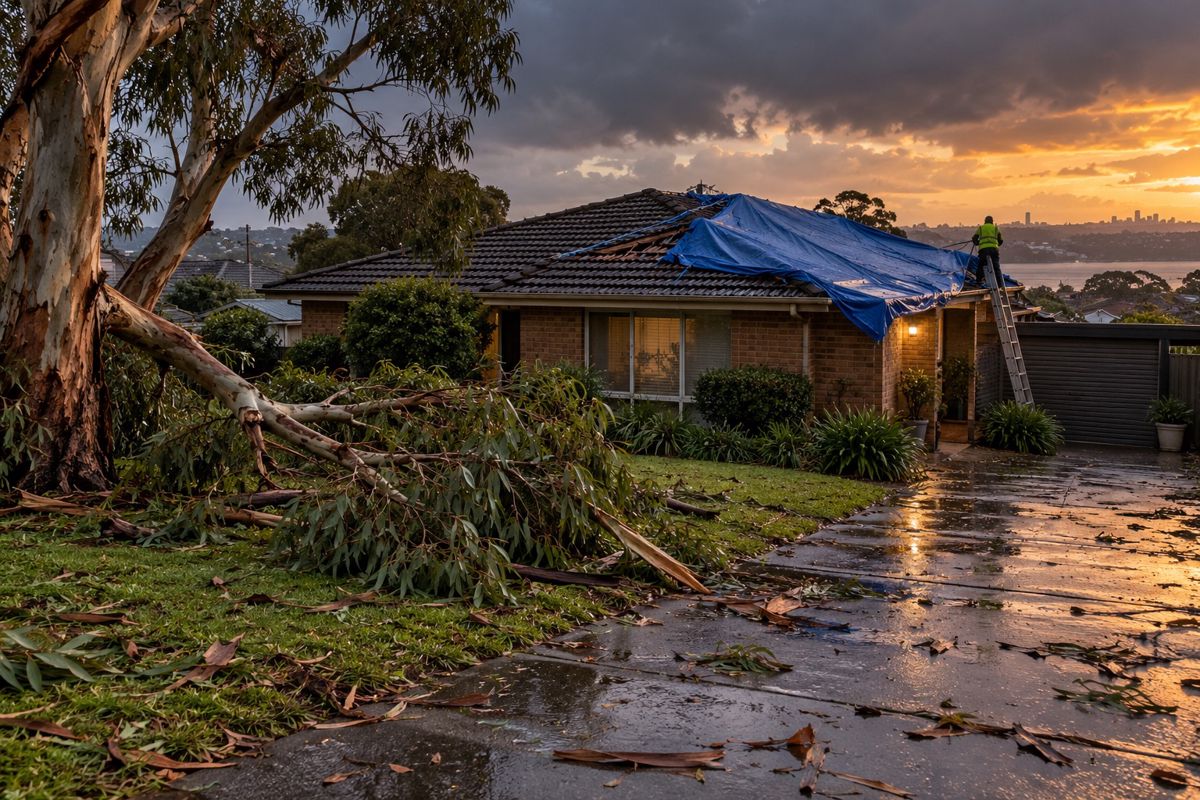
Tarpaulin over storm damaged tiles on a Sydney brick house

Storm and hail damage in Sydney

Storm damage roof repair in Sydney after hail and wind

Stay safe, document the damage and get the roof made watertight. Here is how the process works.

  • Safe first steps after a storm
  • Temporary cover then permanent repair
  • Written report for insurers

Step 1 of 3

What do you need?

What does storm and hail damage look like on a Sydney roof?

Sydney gets severe thunderstorms, mostly in the warmer months, and has a history of large hail events, including the April 1999 hailstorm. Wind, hail and falling branches all leave different marks.

  • Hail. Cracked or chipped tiles, dented Colorbond sheets, damaged skylights, bruised gutters and downpipes, and granules or coatings knocked off.
  • Wind. Lifted or missing tiles, loosened ridge capping, peeled back sheet edges and displaced flashings.
  • Falling debris. Broken tiles, punctured sheets and bent gutters where a branch has landed.

Some damage is easy to spot from the ground. Much of it is not. Small cracks and loosened fixings can sit unnoticed until the next downpour, which is why a proper roof check after a big storm is worth doing even if nothing looks wrong from the garden.

What should you do straight after a storm?

Safety comes first. Do not climb onto a wet or damaged roof. Stay away from any fallen powerlines and report them to the network provider. If the house is in danger or people are at risk, call the NSW SES for storm assistance or triple zero for life-threatening emergencies.

Once it is safe

  1. Take photos and video of the damage from the ground, including any water coming inside.
  2. Move furniture and valuables away from leaks and catch drips with buckets.
  3. Contact your insurer early to ask how to lodge a claim and whether they have preferred contractors or repair limits.
  4. Arrange for the roof to be made watertight so no further damage happens.
  5. Keep any receipts for emergency work. Insurers often ask for them.

Do not throw away damaged tiles or sheets until you have confirmed with your insurer that photos are enough.

How do temporary repairs work?

A temporary repair is about keeping water out, not making the roof perfect. After a storm, a crew may fix tarpaulins over damaged areas, replace broken tiles with matching ones if available, secure loose ridge capping or sheeting, and clear blocked gutters and downpipes.

Tarps need to be fixed properly. A poorly secured tarp can flap in the wind, rip and cause more damage than it prevents. Roof work in wind and rain also carries real risk, so a roofer may need to wait for conditions to ease before going up.

Once the roof is watertight, a permanent repair can be planned. This often includes replacing broken tiles or sheets, re-bedding ridges and replacing flashings. If the damage is widespread, it may be time to discuss a roof replacement. For ordinary leaks that follow smaller events, see roof repair in Sydney.

Storm repair costs depend on how much of the roof is damaged, the roof material, height, access and whether any work is urgent. Matching old terracotta, discontinued tiles or Colorbond colours can add time. Hidden damage to battens, sarking, ceilings and insulation can also change the scope once the roof is opened up.

Your insurance policy sets what is covered. Policies differ on excess, hail cover, wear and tear and who can do the repairs. Ask your insurer in writing what they need from the roofer. Usually that means photos, a description of the damage and a written quote or report.

We can inspect the roof, record the damage and describe the repair required in writing. The insurer decides the claim, not us. If you need a record of roof condition before a storm season, a roof inspection can create a useful baseline.

How long does permanent repair take, and when should you call?

Once the roof is watertight, permanent repairs vary from a day to several weeks. A few broken tiles is quick. A hail-damaged roof across a whole suburb competes for materials and trade time, so waits are common after major events. The insurance process can add its own delays.

Call as soon as you see water inside, missing tiles or sheets, a sagging section, damaged gutters or anything that looks unsafe. Call after a big storm even if you are not sure there is damage, because small cracks cause leaks later. Tell us the roof type, the suburb and what you can see. Photos help us understand the job before we visit.

If a branch or tree has landed on the house, keep everyone clear of the area and leave tree removal to the right professionals.

Clear communication
Free inspections
Written estimates
Local crew

Request storm and hail damage

Tell us what you need and we call you back.

Step 1 of 3

What do you need?

No obligation.

Questions about roofing in Sydney

Should I get on the roof to check for storm damage?

No. Wet roofs are slippery, damaged tiles and sheets can give way, and falls from roofs cause serious injuries. Look from the ground, use a phone zoom or binoculars, and take photos. Call a qualified roofer who has the right equipment for working at heights.

Will my insurance cover hail damage?

Many home insurance policies cover storm and hail damage, but terms, excesses and exclusions differ. Wear and tear or poor maintenance can be treated differently. Read your policy and ask your insurer directly. We cannot decide your claim, but we can inspect and describe the damage in writing.

Can damaged tiles be matched?

Sometimes. Common concrete tiles are often easy to match, while older terracotta can be harder, especially if the profile or colour has been discontinued. Reclaimed tiles may help. If matching is not possible, a roofer may suggest replacing a wider area so the roof looks even.

How do I protect my roof before storm season?

Clear gutters and downpipes, trim branches that overhang the roof and have loose ridge capping or flashings fixed. A roof inspection before summer can pick up weak points. None of this makes a roof hail-proof, but it lowers the chance of a leak after the next big storm.

Is a damaged roof an emergency?

If water is coming inside, if parts of the roof are missing or if the structure looks unsafe, treat it as urgent. Call your insurer and a roofer, and call the SES if there is danger. A small crack with no leak is less urgent but still worth getting checked soon.

How it works

  1. Call or request a quote

    Tell us what is happening with the roof.

  2. Free inspection

    A roofer checks the roof and gives a written price.

  3. Work done right

    Clean crew, nail sweep, warranty in writing.

Ready when you are. Call now or request a quote online.